dont get me wrong. you have to practice ALOT!!! but you also learn through : listening to music, masterclasses, lessons, ear training, life, going out and experiencing life, let life inspire your work and music, you learn through discussions with friends, listening and watching music and lectures and practically anything on youtube, get inspired through art and liturature and every kinds of work, let your thoughts and mind and private ponders grow you, journal, read books, take needed breaks, go out and watch concerts, learn a different instrument, play what you know on a different instrument, compose, Overall, find inspiration from God. This list still goes on...
let life inspire you. leave room to grow and change. enjoy, learn, absorb,

Saturday, November 10, 2012

Monday, October 1, 2012
build your solos in textures
wes montgomry does this by single notes to octaves to chordsmy piano friend tim gave me this advice.. example: when he solo, he starts with more lagato and long note lines (it has space, simple melodic material that is thought in broader picture than just measure to measure.) then he goes into shout chorus and then chordal solo until it climax to the end of his solo.
Dont Practice Soloing... Practice arranging
dont just practice solo ideas.... take the ideas and arrange over tunes... for if you practice this way, the ideas you learn will have more continuity!
Wednesday, August 29, 2012
what follows is part of the talk Karl Paulnack
(boston conservatory) gave to the freshman class and their parents when
he welcomed them to the conservatory.
"The responsibility I will charge your sons and daughters with is this:
'If we were
"The responsibility I will charge your sons and daughters with is this:
'If we were
a medical school, and you were here as a med student practicing
appendectomies, you'd take your work very seriously because you would
imagine that some night at two AM someone is going to waltz into your
emergency room and you're going to have to save their life. Well, my
friends, someday at 8 PM someone is going to walk into your concert hall
and bring you a mind that is confused, a heart that is overwhelmed, a
soul that is weary. Whether they go out whole again will depend partly
on how well you do your craft.
You're not here to become an entertainer, and you don't have to sell yourself. The truth is you don't have anything to sell; being a musician isn't about dispensing a product, like selling used cars. I'm not an entertainer; I'm a lot closer to a paramedic, a firefighter, a rescue worker. You're here to become a sort of therapist for the human soul, a spiritual version of a chiropractor, physical therapist, someone who works with our insides to see if they get things to line up, to see if we can come into harmony with ourselves and be healthy and happy and well.
Frankly, ladies and gentlemen, I expect you not only to master music; I expect you to save the planet. If there is a future wave of wellness on this planet, of harmony, of peace, of an end to war, of mutual understanding, of equality, of fairness, I don't expect it will come from a government, a military force or a corporation. I no longer even expect it to come from the religions of the world, which together seem to have brought us as much war as they have peace. If there is a future of peace for humankind, if there is to be an understanding of how these invisible, internal things should fit together, I expect it will come from the artists, because that's what we do. As in the concentration camp and the evening of 9/11, the artists are the ones who might be able to help us with our internal, invisible lives.'
You're not here to become an entertainer, and you don't have to sell yourself. The truth is you don't have anything to sell; being a musician isn't about dispensing a product, like selling used cars. I'm not an entertainer; I'm a lot closer to a paramedic, a firefighter, a rescue worker. You're here to become a sort of therapist for the human soul, a spiritual version of a chiropractor, physical therapist, someone who works with our insides to see if they get things to line up, to see if we can come into harmony with ourselves and be healthy and happy and well.
Frankly, ladies and gentlemen, I expect you not only to master music; I expect you to save the planet. If there is a future wave of wellness on this planet, of harmony, of peace, of an end to war, of mutual understanding, of equality, of fairness, I don't expect it will come from a government, a military force or a corporation. I no longer even expect it to come from the religions of the world, which together seem to have brought us as much war as they have peace. If there is a future of peace for humankind, if there is to be an understanding of how these invisible, internal things should fit together, I expect it will come from the artists, because that's what we do. As in the concentration camp and the evening of 9/11, the artists are the ones who might be able to help us with our internal, invisible lives.'
Monday, March 7, 2011


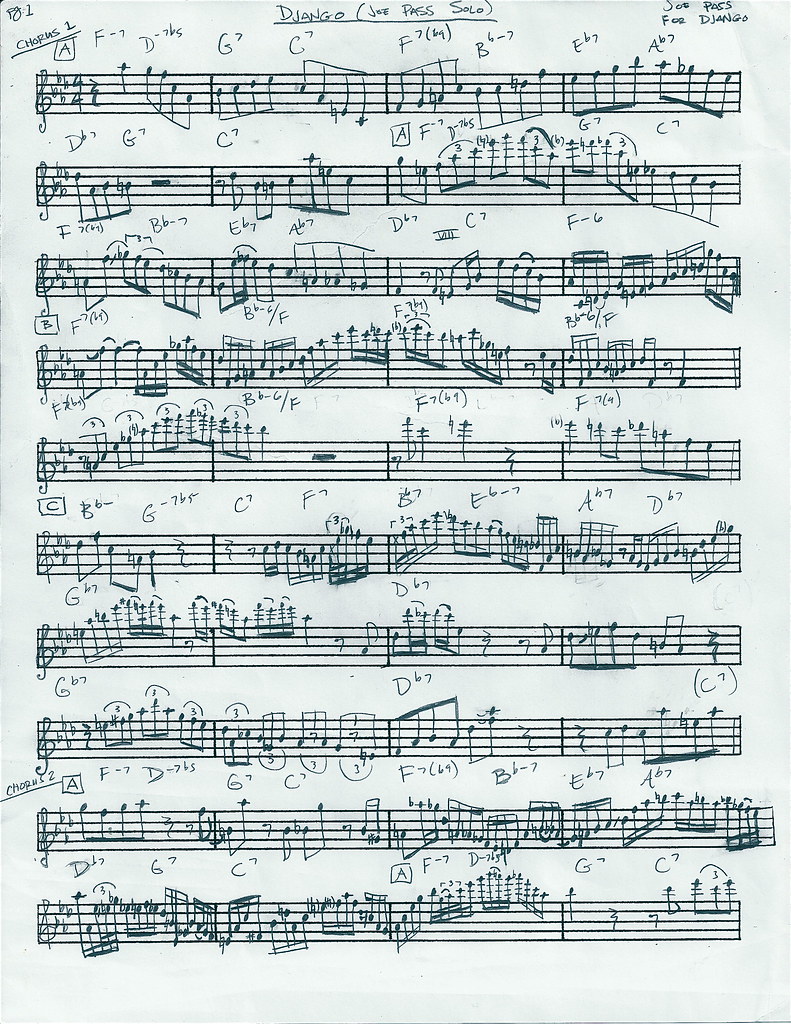

Saturday, March 5, 2011
Thursday, December 16, 2010
Articulation and Technique Issues
http://tomhess.net/ImproveGuitarTechnique.aspx
How To Improve Your Guitar Technique And Play Guitar Clean - Part 1
By Tom Hess
Do you want to improve your guitar technique, play guitar clean, eliminate sloppy playing and unwanted string noise? Sloppy guitar technique is a very common problem. Many guitarists have been asking for solutions. This article will help you to play guitar clean and improve your guitar technique.
There are 5 main challenges that electric guitar players must overcome in order to learn and master guitar technique. These 5 guitar technique challenges are divided into 3 groups:
1. Awareness
2. Sounds you 'want' to hear (the notes you are attempting to play clean)
3. Sounds you do ‘not’ want to hear (the sloppy sounds you sometimes hear such as unwanted string noise)
Today we will take a look at the first two groups. In Part 2 of this article series we'll focus on the last group of guitar technique challenges.
Focused Awareness - Many guitar players are not fully aware of every imperfection in their guitar technique. Some of these players do sense that 'something' may be wrong, but are not sure about exactly what their specific guitar technique problems are. Obviously, you cannot effectively correct a technical problem until and unless you know exactly what it is.
There are 2 main ways you can approach this:
1. Record yourself playing a guitar technique you want to improve on. Listen back (carefully) at 25%-33% speed so that you more easily identify any unclear notes, excess string noise, scratchy noises between the notes, inconsistency in your pick attack, etc.). You may or may not be able to hear everything on your own (many people simply can’t yet) and you may or may not be able to ‘correctly’ identify the cause of each imperfection present in your guitar technique. If you can that’s great, but if you’re not sure then…
2. Work with a guitar teacher to evaluate your playing and use that feedback to clean up your guitar playing and improve your guitar technique. Not only will a good guitar teacher help you to play guitar clean by telling you 'what to do', but also because he will hear problems that you may not really be hearing when you play guitar.
IF you have an excellent ear, you should be able to identify the fine details of your problem, if not, work with your guitar teacher.
Articulation - The First Half of Two Hand Synchronization
The second step to improve your guitar technique is to focus on your articulation. Articulation is the first half of two hand synchronization. To play guitar clean you need your hands to fret and pick each note at precisely the same time (simultaneously).
There are 3 critical things you need to do to improve your guitar technique:
- Use a clean guitar tone when practicing (no distortion and NO effects!). Distortion and effects will mask any imperfections in your articulation, so do not practice with them when focusing on "Articulation" (the rules will change when we talk about "The Release" in the next section).
- Play loud enough so that you can truly hear what is happening as you are playing.
- When you are practicing something slowly MAKE SURE that you do NOT change ANYTHING about how you approach and articulate each note. Fact is, most guitar players actually play very differently when playing slow compared to when playing fast. If you change anything in the way you are articulating the notes (such as playing with a lighter touch, using a weaker or stronger pick attack, changing your hand position, pick angle etc.) you will NOT fully improve your guitar technique because the sound you make when playing will be different and therefore harder to detect and identify any problems with your articulation.
The Release - The Second Half of Two Hand Synchronization
The third step toward clean guitar playing is ‘the release’. For most guitar players 'the release' is the hardest problem to detect and correct. That’s generally because once players articulate a note cleanly, they ignore what immediately comes after (small sloppy noise in between the notes or 2 notes slightly ‘bleeding’ together.
And practicing your guitar with a ‘clean’ tone (no distortion) - as described above when focusing on articulation – almost always masks problems in the release phase of playing a note. This is why many people think their guitar playing sounds pretty clean when practicing without distortion but sense something is wrong when later playing with distortion… but they are not sure what the problem is… or worse, they actually do not hear the problem at all (but other people do). This is why focused awareness is so critical.
I use multiple steps to help my guitar students fully solve this problem (not all of which can be fully demonstrated or expressed in an article), but here are the absolutely necessary steps toward correcting problems with ‘the release’.
- Practice your guitar WITH distortion (but NO EFFECTS!) now. (Notice, this is the exact opposite advice I gave you to identify and correct ‘articulation’ problems above).
- Again you need to play your guitar loud enough to hear precisely what is coming out of your amplifier (other noises in the room can mask the subtle things you need to be listening for).
- Practice slow (but as stated above, do NOT change ANYTHING in the way you articulate OR RELEASE a note compared to when you are playing fast!).
- Listen for any subtle noise in between notes (you will probably notice a ‘scratchy sound’ just before you play the next note). If you have a hard time hearing anything, then record yourself and listen back to the recording at 1/4 or 1/3 speed (I guarantee you will hear this short scratchy sound now!)
- Now that you know what to listen for, you will probably notice it all the time whenever you listen very carefully… and THEN you are ready to being to correct the problem…
Fact is there can be several reasons why your guitar playing is not clean during the release of a note, but the most common cause is this: When you release a note your brain is probably telling your finger to ‘lift off’ (make an upward motion away from the string you just played). This can cause all sorts of nasty guitar technique problems (fatigue, slower guitar playing speeds, and sloppy guitar playing… among other things).
The solution is to stop your brain from sending your fingers instructions to ‘lift off' of each note and instead to simply ‘relax’. When your finger relaxes it will naturally, immediately and effortlessly ‘release’ the note you just played. There are 2 main benefits to this:
- Because the motion is effortless, you can play faster and for a much longer time (and most importantly) with greater ease.
- Because your brain does not give the finger the instruction to make a ‘lift off’ motion this actually prevents your finger from moving (or preparing to move) prematurely (which is a major cause of the sloppy ‘scratchy sound’ that may be present in your guitar playing.
It is now very important to realize two things. First you CAN solve these problems and improve your guitar technique. Second, it won’t happen over night, this will take time and some consistent practice (possibly over several weeks or longer). But the benefits of being able to play guitar clean are well worth the patience required.
In Part 2 of this article series we'll focus on the last group of guitar technique challenges so that you have all 5 key elements to improve your guitar technique and play guitar clean.
Subscribe to:
Posts (Atom)